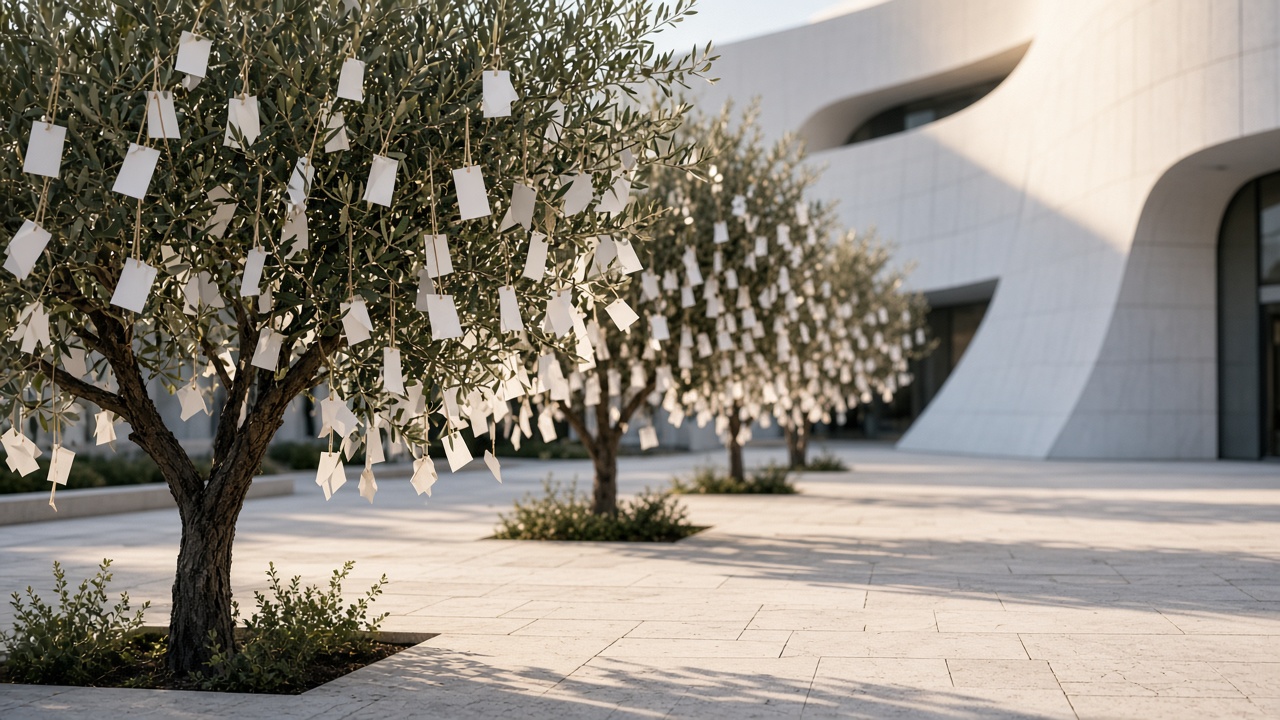
There is not long left. Yoko Ono: Music of the Mind, the exhibition that has turned The Broad in downtown Los Angeles into one of the city's most hands-on museum experiences this year, closes on Sunday 11 October 2026. It opened on 23 May.
If you are in LA this week, here is what you need to know — and why it is worth going.
The essentials
What: Yoko Ono: Music of the Mind
Where: The Broad, 221 S. Grand Avenue, Los Angeles, CA 90012
Dates: 23 May – 11 October 2026
Tickets: include access to the whole museum, including the third-floor galleries with featured installations by Takashi Murakami and Jean-Michel Basquiat
Free entry: every Thursday, 5–8pm — which makes Thursday 8 October the last free evening of the run
Walk-ups: welcome, but The Broad recommends booking timed-entry tickets to skip the standby line
One thing tickets do not include: Yayoi Kusama's Infinity Mirrored Room — The Souls of Millions of Light Years Away (2013), which is booked separately. Expect weekend queues as the closing date approaches.
Why this show matters
This is Ono's first solo museum exhibition in Southern California, according to The Broad. It was organised by Tate Modern in London, where it was shown in 2024, in collaboration with The Broad. Juliet Bingham of Tate Modern curated the exhibition; Sarah Loyer curated the LA presentation.
It traces more than seven decades of work — from Ono's text-based pieces of the 1950s and 1960s to recent large-scale installations tied to her long campaigns for peace.
That matters because Ono's reputation has often been flattened into one relationship. The Broad's show makes the case, at scale, for what art historians have argued for decades: that she was a pioneer of conceptual and participatory art before most of the world knew her name.
The art of instructions
The heart of the show is Ono's "instruction" pieces. Since the mid-1950s she has written short prompts that ask the viewer to complete a work — physically, or in the mind.
Typescript drafts for Grapefruit, her 1964 book of instructions, include lines such as "Listen to the sound of the Earth turning" and "Draw a map to get lost". In the galleries, some instructions are live. In Painting to Hammer a Nail (1961/1966), visitors hammer nails into the surface of the work.
In Helmets (Pieces of Sky) (2001), upturned Second World War-era German soldiers' helmets hold puzzle pieces of sky. Visitors take one away, becoming part of an unfinished work about rebuilding the world together.
Wish Tree and the works you add to
Outside, on East West Bank Plaza, The Broad's olive trees have become Wish Tree for Los Angeles (1996). You write a wish for peace and tie it to a branch, joining the thousands already gathered over the run.
Inside, My Mommy Is Beautiful (2004) invites visitors to write a note about their mother or pin up her photograph, so the work grows into a collective portrait of motherhood. Add Colour (Refugee Boat) (1960/2016) starts as an all-white room and boat; visitors cover it in blue marks and messages reflecting on the refugee crisis.
By the final weekend, these works will look very different from how they did in May. That is rather the point.
Cut Piece and the films
Ono's 1964 performance Cut Piece — in which she sat silently on stage while audience members cut away pieces of her clothing — is shown through film documentation. It remains one of the defining works of performance art, and it still lands hard on screen.
The films are a strong reason to visit in their own right. FILM NO. 1 ("MATCH") (1966) stretches the striking of a match into slow motion. The once-banned FILM NO. 4 ("BOTTOMS") (1967) realises the score "String bottoms together in place of signatures for petition of peace". FLY (1970–71) and Freedom (1970) challenge conventional images of the female body, agency and sexuality.
Peace, as a medium
A section on activism draws on rarely seen material from Acorn Event (1968), when Ono and John Lennon planted acorns as a living sculpture for peace at the ruins of Coventry Cathedral. The following year they posted acorns to 96 world leaders. Documentation of their 1969 Bed-In for Peace — a honeymoon turned media campaign against the Vietnam War — rounds out the story.
The Broad displays one of Ono's best-known lines: "A dream you dream alone is only a dream. A dream you dream together is reality."
A career in brief
Born in Tokyo in 1933, Ono was the first female philosophy student at Gakushuin University before moving to New York in 1953. In 1960 she organised performances with composer La Monte Young at her Chambers Street loft, and her first solo exhibition followed in 1961 at AG Gallery. She moved to London in 1966, where she met Lennon at her Indica Gallery show.
Later honours include the Golden Lion for Lifetime Achievement at the 2009 Venice Biennale, and major exhibitions at MoMA (2015), Tate Modern (2024) and the Neue Nationalgalerie in Berlin (2025).
Should you go?
Yes — and go prepared to take part. Unlike most retrospectives, this one is unfinished until you arrive. Bring a pen, leave time for the Wish Tree, and if you can, use the last free Thursday on 8 October. After Sunday, the show is gone.