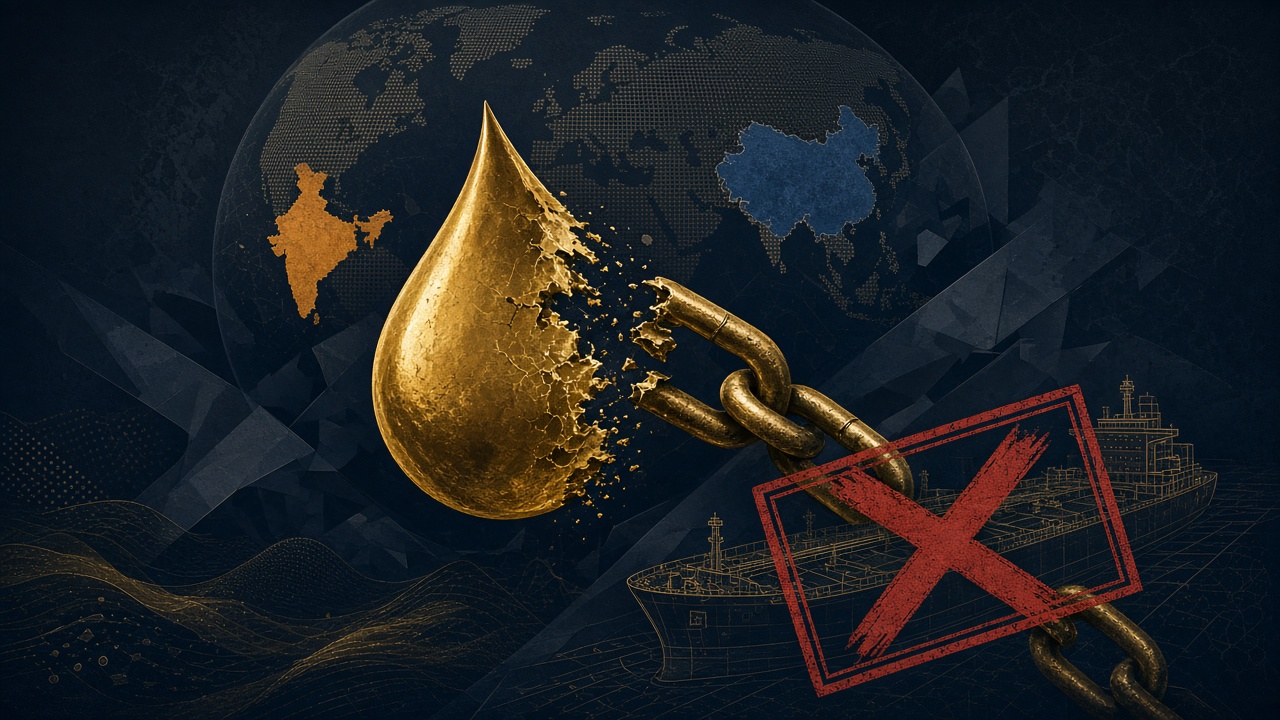
US President Donald Trump has signed into law a major sanctions package aimed at Russia’s war in Ukraine, giving Washington new tools that could also put large buyers of Russian energy — including India and China — under pressure from steep US tariffs.
The legislation, formally known as the Lindsey O. Graham Sanctioning Russia and Iran Act of 2026, cleared Congress with rare bipartisan backing before reaching the White House. Trump signed it on Friday, according to reports from Al Jazeera, India Today and other outlets.
What the new law does
The Act targets Russian President Vladimir Putin, senior officials and oligarchs, as well as Russian banks and financial institutions. It also hits Moscow’s energy and defence sectors and the so-called “shadow fleet” of tankers accused of helping move Russian oil around existing Western restrictions.
A central clause requires the administration to impose tariffs of up to 100 percent within 30 days on goods imported into the United States from the five largest importers of Russian crude oil or gas. The same framework can cover countries that knowingly make new Russian energy purchases after the law takes effect, or that rank among the top five helpers of sanctions evasion.
The bill separately extends sanctions on Iran’s energy and weapons sectors. It is named in honour of late Republican Senator Lindsey Graham, who spent more than a year negotiating the measure before his death in July, and was co-written with Democratic Senator Richard Blumenthal.
Why India is in the spotlight
India and China are among the world’s biggest buyers of Russian oil. The statute does not name specific countries or spell out in detail how the “top five” lists will be calculated, leaving significant discretion with the Trump administration.
India Today reported that the new powers could open the door to steep tariffs on Indian goods entering the US market, though the immediate impact remains uncertain. Analysts cited in that coverage suggested Trump may hesitate to use measures that could push up consumer and energy prices ahead of the November midterm elections.
New Delhi has said it remains “firmly committed to ensuring energy security for its 1.4 billion people,” according to Al Jazeera’s reporting on India’s response. China has criticised what it calls “long-arm jurisdiction” without a clear basis in international law.
Trade specialists have also flagged ambiguity. Jeannette Chu of the National Foreign Trade Council said assessments differ on which nations could ultimately be targeted, with India, Brazil, Japan and some European Union countries among those discussed in industry circles.
Political and market stakes
Supporters argue the package is meant to starve the Kremlin of war funding and push Moscow toward negotiations. Ukrainian President Volodymyr Zelenskyy called the legislation “an extremely powerful tool.” House Speaker Mike Johnson described it as “maximum pressure” on Russia’s war machine.
Not all Democrats agreed. House Minority Leader Hakeem Jeffries opposed the bill, warning that its tariff powers could raise costs for American families and calling the sanctions provisions full of loopholes.
The timing is sensitive. Duties would need to be announced within 30 days, potentially landing close to the midterms. Higher tariffs on Russian-energy buyers could disrupt oil flows and add to inflationary pressure — a risk for both global markets and US voters.
The law also lets Trump waive tariffs or sanctions on national security grounds, giving the White House flexibility over how aggressively to enforce it. White House legislative director James Braid said the measure marks the first time in nearly 40 years that Congress has granted new tariff authorities to the executive branch, according to India Today.
Trump is due to host Chinese President Xi Jinping at the White House about a week after the signing, adding another layer of diplomatic timing to how — and whether — the tariff powers are used.
What to watch next
Whether the administration publishes a clear “top five” importer list within the 30-day window; any national-security waiver for India or other major buyers; spillover into India–US trade talks and oil prices; and how markets price the risk of renewed energy disruption.
This article is based on reporting from Al Jazeera, India Today and related wire coverage as of 19 September 2026. Figures and quotes are attributed to those sources and may be updated as official texts and enforcement guidance are released.