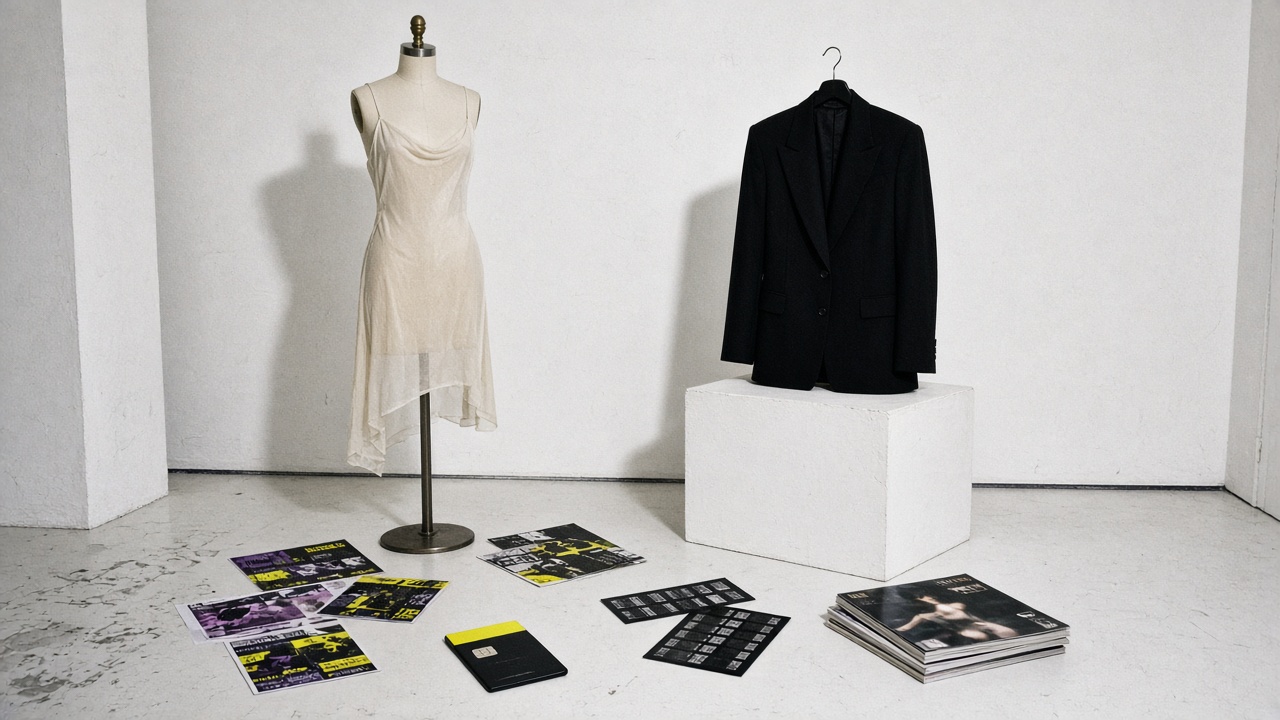
The 1990s have been back in fashion for years — slip dresses, bucket hats, rave revival nights. Now the decade gets the museum treatment. The 90s: Art and Fashion opens at Tate Britain on 8 October 2026 and runs until 14 February 2027.
Tate Britain describes it as the first exhibition to explore the art, photography and fashion of the 1990s together. It brings together nearly 70 artists, photographers and designers and more than 100 photographs, paintings, sculptures and garments. The curator is Edward Enninful OBE, the former British Vogue editor-in-chief, who drew on his own experience of the decade.
Dates, times and tickets
Dates: 8 October 2026 – 14 February 2027
Where: Tate Britain, Millbank, London SW1P 4RG
Opening hours: daily, 10.00–18.00
Tickets: at tate.org.uk or on +44 (0)20 7887 8888
Free for Tate Members
Ages 16–25: £5 through the free Tate Collective scheme
Audio guide: £5, on your own smartphone, with contributions from Enninful, Tate curators and exhibiting artists
Tate has not tied the show to a single headline price in its press materials, so check the website for standard adult tickets and peak-time slots before you travel.
Why Enninful, and why now
Enninful's career is bound up with the period on the walls. According to Tate, he became the youngest-ever fashion editor of an international publication, i-D, at 18. By 1998 he was a fixture at Italian Vogue. He later became the first Black editor-in-chief in Vogue's history at British Vogue, and in 2025 launched his own media company, EE72.
That background shapes the argument of the show. Rather than treat fine art and fashion as separate stories, it presents them as one scene — the same magazines, the same clubs, the same appetite for risk. Tate frames the decade as a creative surge that followed the economic uncertainty of the 1980s.
He is not working alone. The curatorial team includes Tate Britain director Alex Farquharson and curators Jessica Vaughan, Helen Little, Dominique Heyse-Moore and Celeste McEvoy.
What's in the show
Anti-fashion and the DIY look. The exhibition opens with the raw, imperfect photography that defined magazines such as i-D and Dazed and Confused: Corinne Day, Nigel Shafran and Juergen Teller. Tate links this to the moment Kate Moss in Liza Bruce's sheer slip dress became tabloid fodder.
Real people as muses. Work by Barbara Walker, Jenny Saville and Gillian Wearing sits alongside Tracey Emin, Sam Taylor-Johnson and Sarah Lucas, whose frank work on agency, identity and class made them household names.
Clubs and subculture. Mark Leckey's 1999 film Fiorucci Made Me Hardcore anchors a section on nightlife. Photographs follow acid house (Dave Swindells, Peter J Walsh, Tony Davis), jungle, hip-hop and drum and bass (Normski, Eddie Otchere, Ewen Spencer), queer club nights and free parties — from the Haçienda in Manchester to Bagley's in London.
Body horror and minimalism. Helen Chadwick, Jake and Dinos Chapman and Cathy de Monchaux explore decay and revulsion; Hamad Butt responds to the AIDS crisis. Rachel Whiteread, Gary Hume and Cerith Wyn Evans pare things back, while Damien Hirst's formaldehyde sculptures remove the artist's hand altogether.
Fashion as spectacle. Alexander McQueen's dramatic presentations and Hussein Chalayan's object-inspired clothing show designers blurring art and fashion. Nick Knight, David Sims and Craig McDean push photography towards something starker, and Wolfgang Tillmans's Concorde Grid (1997) catches the millennial mix of optimism and anxiety.
Beyond Cool Britannia
The most interesting room may be the one that questions the decade's own myth. Tate says many artists used their work to draw attention to people left out of the Cool Britannia story.
Steve McQueen's first major film, Bear (1993), appears alongside Chris Ofili's Turner Prize-winning painting No Woman, No Cry (1998), a tribute to Doreen and Stephen Lawrence. Keith Piper's video reflects on sport and national identity. Tailoring by Ozwald Boateng, runway footage from Joe Casely-Hayford and photography by Koto Bolofo celebrate Black British designers, while Jason Evans and stylist Simon Foxton document street style.
The show closes with Yinka Shonibare and Maud Sulter drawing on European art history, and with Vivienne Westwood and John Galliano raiding history and national mythology for their collections.
Events around the exhibition
Tate has built a programme around the show:
The 90s On Screen film series in the Clore Auditorium: Trainspotting (Saturday 10 October), Orlando (5 December), Bhaji on the Beach (30 January) and Babymother (13 February). Tickets £15, £13 for Members and concessions, £5 for Tate Collective.
Talk 90s to Me, a live podcast recording, Thursday 22 October, 19.00–20.30 (£22, Members £19).
Late at Tate Britain, Friday 13 November, 18.00–22.00, free, with a 1990s-inspired atmosphere.
Why it matters
Nostalgia shows are easy to dismiss. This one has a stronger case. Putting Corinne Day next to Damien Hirst, and Ozwald Boateng next to Tracey Emin, argues that the decade's art cannot be understood without its magazines, clubs and catwalks — and that the Black British artists and designers of the period belong at the centre of the story, not the margins.
The exhibition is supported by McQueen, with Dazed as media partner. For anyone who lived through it, it is a reunion. For anyone who has only seen the decade on TikTok, it is the source material.