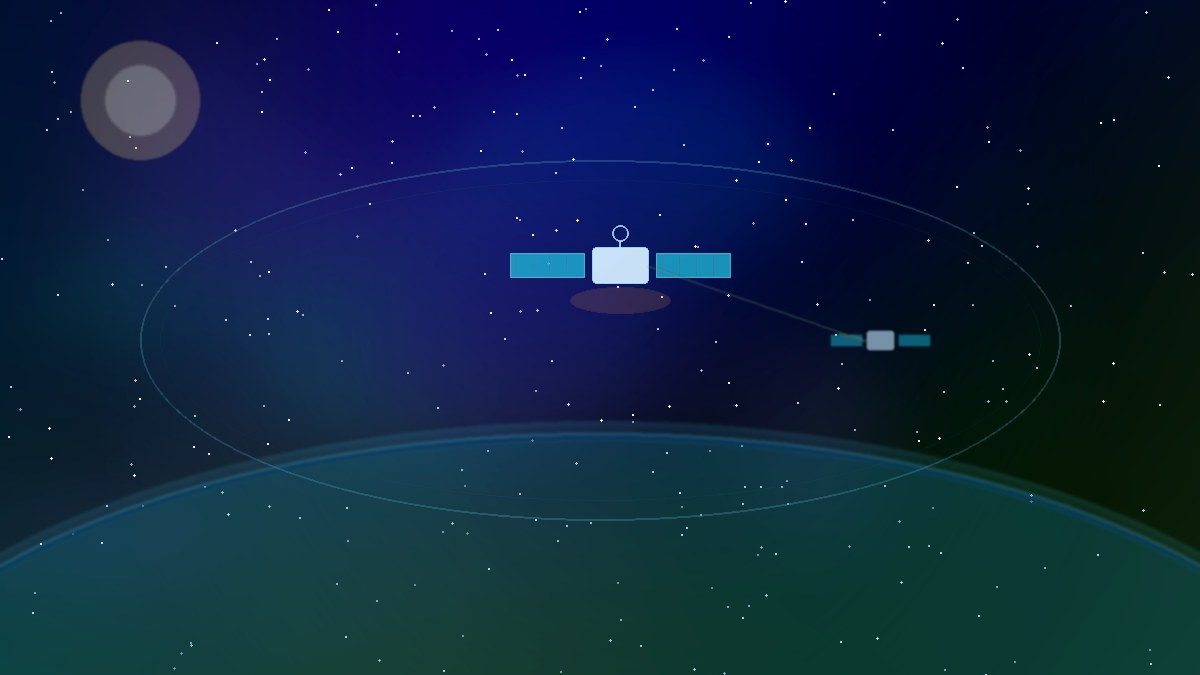
LOW EARTH ORBIT — Google Project Suncatcher has left the pad. On 1 October 2026 at approximately 2:32 p.m. EDT, a SpaceX Falcon 9 rideshare lofted Google’s first AI datacenter test satellite into low-Earth orbit, carrying Tensor Processing Units built to train and run machine-learning models. Scientific American reported the lift-off as the opening move in a long research bet on orbital compute; Google’s own blog said the prototype, built with Planet and flown on Transporter-18, is in contact and operating as expected.
The mission is not a full bit barn in the sky. It is a stress test: can Google’s TPUs survive launch vibration, ionizing radiation, and vacuum heat with a novel cooling stack that cannot rely on air? Over the coming weeks, engineers will gather in-orbit data while a peer-reviewed paper in Joule maps how — and whether — space-based AI infrastructure could ever scale.
What Google Project Suncatcher is testing in LEO
According to Scientific American, the satellite’s trial TPUs had already been hammered on the ground. Some chips went through simulated solar radiation and cosmic-ray exposure at a proton-beam facility at the University of California, Davis. In a blog post cited by SciAm, Google said the chips held up “remarkably well,” with data suggesting they could tolerate more ionizing radiation than they would be expected to see over five years in space.
Cooling is the other headline experiment. With no airflow in orbit, Google engineers designed a new way to dump the intense heat TPUs produce under AI workloads. The Register’s coverage of the launch frames Suncatcher as validation work for a larger thesis: that near-continuous solar energy in space could make the economics of orbital servers competitive if launch costs fall far enough — and if networking, thermal design, and formation flying catch up.
Google’s Travis Beals, writing on the company blog, called the flight the first step in a research moonshot on whether space can host scalable machine-learning infrastructure. Partnership with Planet Labs puts flight operations and satellite know-how alongside Google’s silicon. Scientific American notes that OpenAI and xAI are also exploring orbital datacenter ideas as terrestrial power, land, and politics tighten around ground campuses.
Why the Joule paper still casts doubt on scale
The Register reports that Google’s launch announcement linked to peer-reviewed research titled “Toward a future space-based, highly scalable AI infrastructure system design.” Far from a victory lap, the paper catalogues hard gates. SpaceX and others have suggested orbital datacenters become viable around launch costs of about $200 per kilogram. Google’s researchers note SpaceX has cut cost per kilogram by roughly 20 percent after each doubling of cumulative launched mass. Holding that learning curve, The Register summarizes, would imply on the order of 370,000 tonnes of additional cumulative mass — about 1,800 successful Starship-class launches — plus components reused about 100 times before $200/kg looks “plausible under reasonable assumptions.”
Even then, economics only close if annualized cost per unit of power in space approaches terrestrial spend. Google has not published the mass of future datacenter satellites; The Register notes the paper’s comparison against Starlink second-generation craft at about 575 kg as a reference point, not a Suncatcher bill of materials.
Networking, formation flight, and the 2027 laser-link sats
Hardware survival is only the first milestone. The Register highlights Google’s finding that existing network technologies are probably unsuitable for linking many satellites into functioning clusters. Plans call for designs “significantly larger” and much closer formation flight than current constellations — precision more like keeping a high-bandwidth laser on a coin-sized target from miles away while both ends move.
Scientific American and Google’s prior Suncatcher briefings both point to a 2027 follow-on: two experimental satellites intended to test how orbital AI nodes might talk to each other over lasers. Ground links matter too. The paper, as summarized by The Register, flags atmospheric turbulence, high-speed relative motion, and precision beam tracking as blockers, citing NASA’s TBIRD demonstration of roughly 200 Gbps LEO-to-ground optical links as a promising path.
Satellite architecture itself may have to change. Google’s researchers write that early designs assume discrete compute payloads, buses, radiators, and solar panels — but scaled production could push toward highly integrated compute–radiator–power stacks, even speculative computational substrates. Realizing the ambition, they conclude, will need sustained research, iterative design, and several future milestones.
What critics and competitors say about orbital AI
Scientific American notes astronomers’ criticism that orbital datacenters could worsen light pollution and night-sky interference already strained by mega-constellations. Political and resource pressure on Earth-bound AI campuses — unpopular local siting, power draw, water for cooling — is exactly what makes the space pitch attractive to hyperscalers. That does not erase cost, debris, spectrum, or astronomy trade-offs.
For readers tracking Google Project Suncatcher, Google Project Suncatcher launch, or orbital AI datacenter timelines, the verified picture as of 2 October 2026 is this: a Falcon 9 has placed Google’s first TPU-bearing test satellite in LEO; contact is confirmed; radiation and novel cooling are the near-term science; a Joule paper sketches scale only if launch prices and laser networking both break open; and two laser-link test satellites are planned for 2027. Primary sourcing: Scientific American (Adam Kovac, 1 October 2026), The Register (Simon Sharwood, 2 October 2026 UTC), and Google’s Project Suncatcher prototype blog (Travis Beals, 1 October 2026). The Sunday Profile will watch in-orbit TPU telemetry, any debris or astronomy response, and whether the 2027 pair flies on schedule.